The Plates Outlived the Company That Made Them
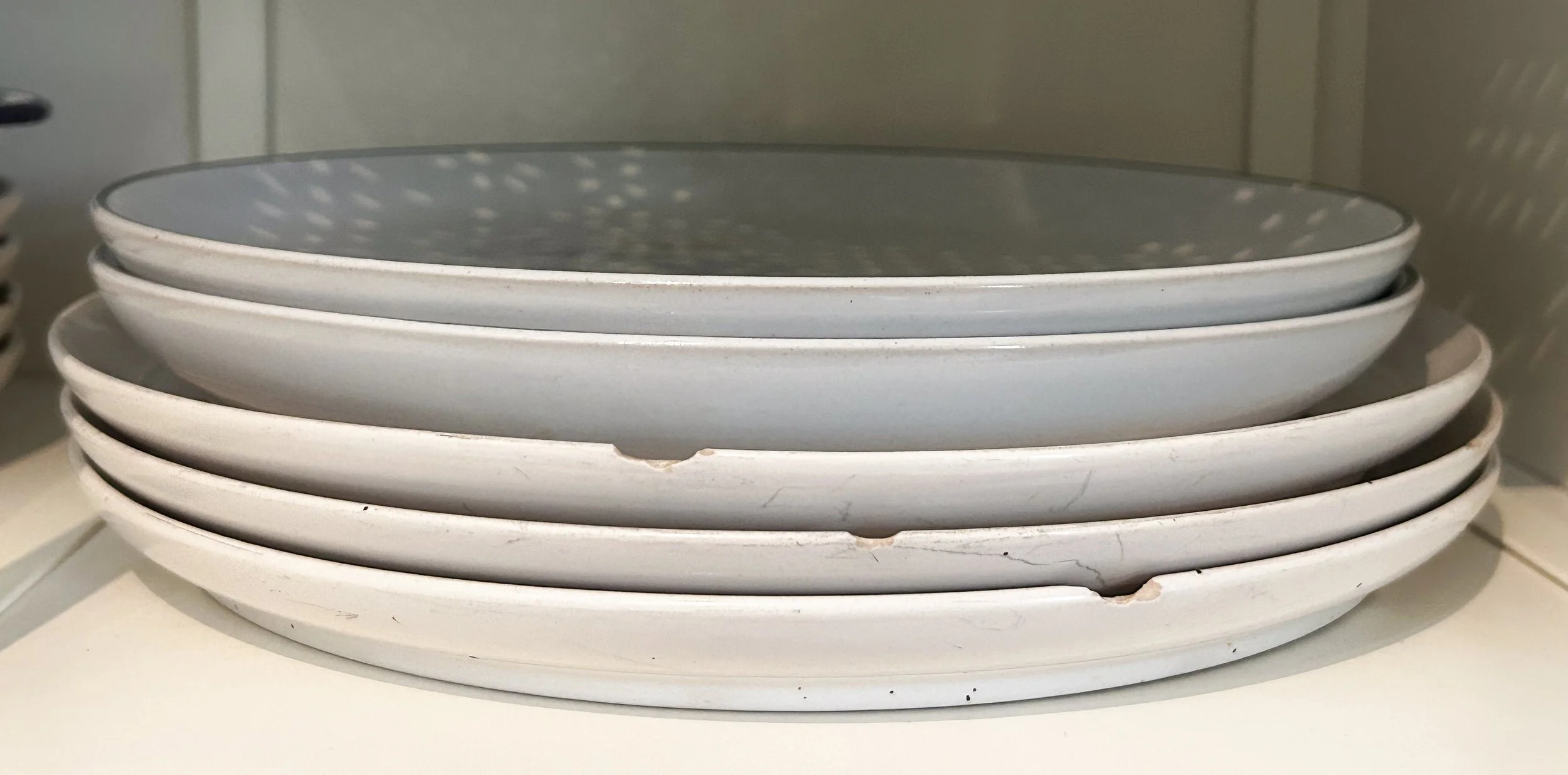
There is one stack of plates in my kitchen cupboard.
The bottom of the stack is a John Lewis set from the ANYDAY range. Four plates, four side plates, four bowls, £45, bought in 2022. I know it was £45 because I found the receipt. Most of them now have a chip on the rim. All of them are scratched. When we move house that set will stay behind, because there’s no sense packing something already halfway to the tip.
The top of the stack is Denby Pottery. It was my mother-in-law’s, inherited, mismatched, most of it likely charity-shop in origin. I have never especially liked them, particularly because we don’t have a full set. But they are used every day, they go in the dishwasher, and there is not a chip or a scratch on any of them.
That’s what caught my attention. So I looked them up.
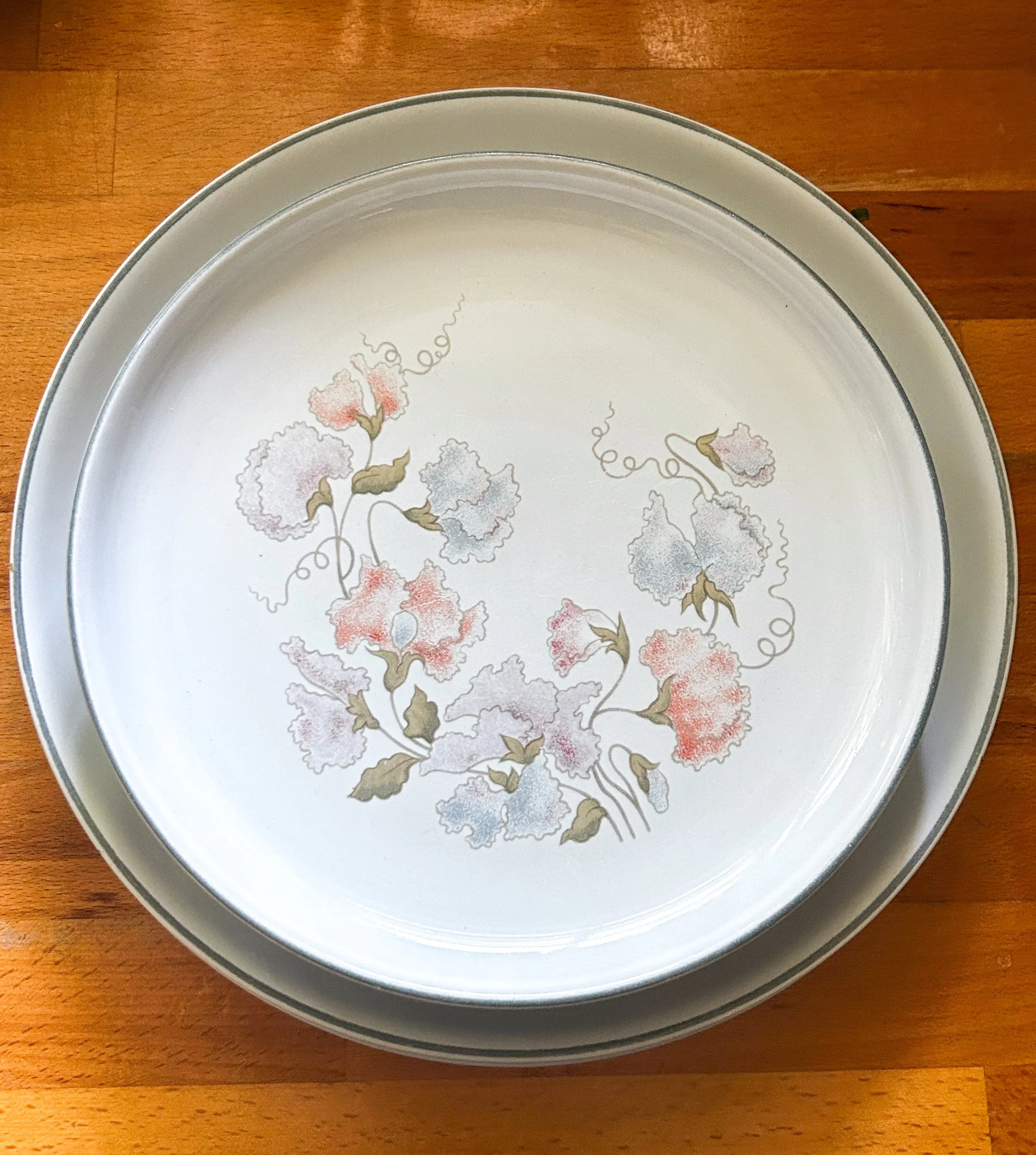
Most of what I have is the Encore range, the sweet pea pattern, produced between 1988 and 1998. There’s a single plate from the Troubadour range, hand-painted magnolias, made between 1971 and 1984. The oldest piece on that shelf is comfortably over forty years old. The newest is nearly thirty. They are all perfect.
Denby Encore, 1988–1998. Still in daily use.
The set I bought new, from a good shop, lasted four years.
And the company that made the ones that survived went into administration on 31 March. The final piece came out of the kiln on 4 June. Two hundred and seventeen years, finished.
This isn’t a sad story about a lovely old British brand. It’s a story about how a company can make the best product in its market and still go under.
What I was actually buying
Here’s the part that matters commercially, and it took me a while to see it because I was in it.
I did not buy the John Lewis set thinking I was making a compromise on quality. I liked the pattern. It was £45. And being John Lewis I expected decent quality (I was not buying the supermarket ones, or Ikea, it was John Lewis). Most of all I wanted one complete matching set — plates, side plates, bowls — because what I had inherited was a mismatched assortment.
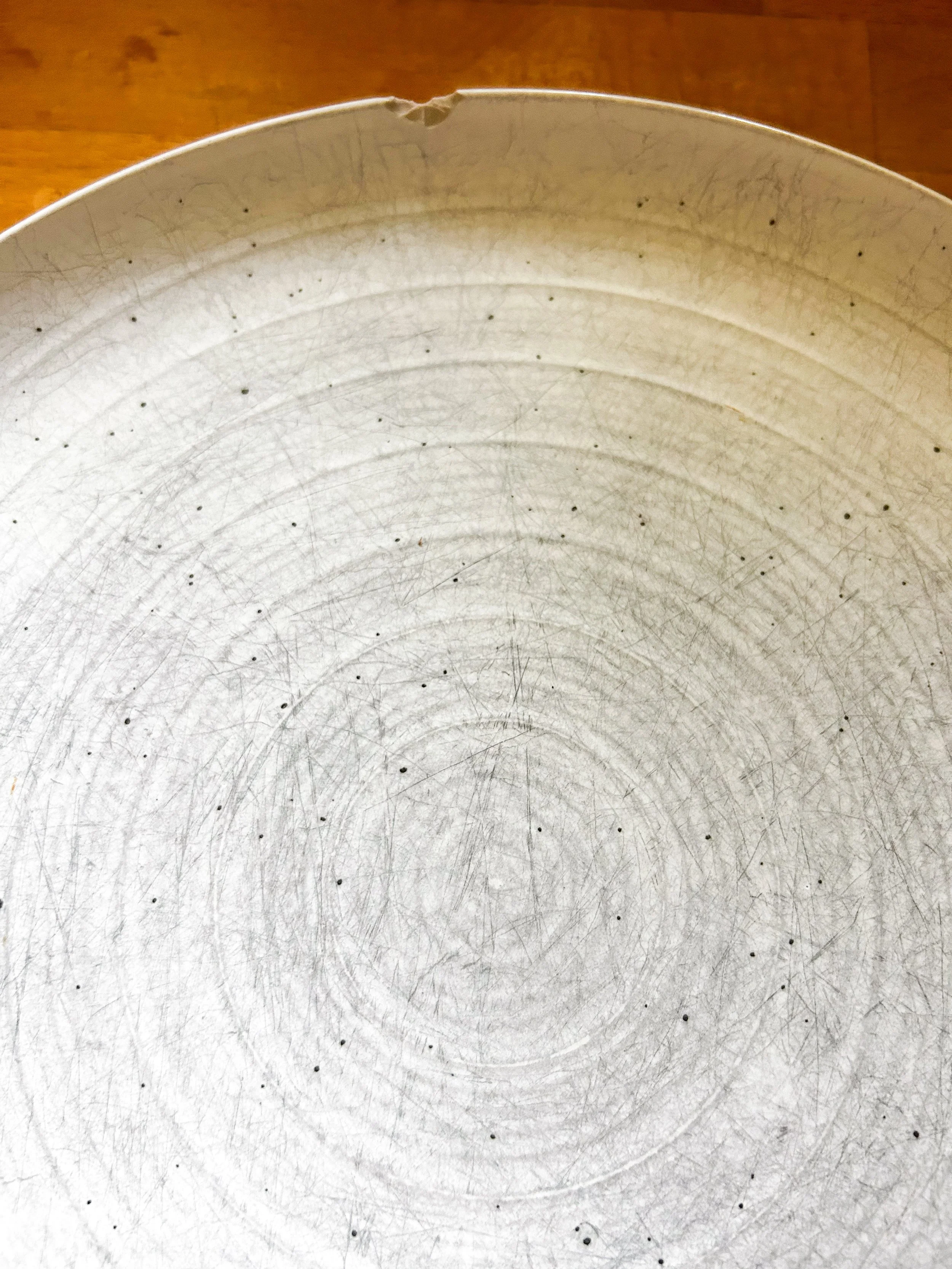
The glaze after four years of knives.
I was buying coherence. I was not looking for forever. My thoughts were: What are the nicest plates I can get, of a decent quality, on my budget?
Now run the numbers I never ran.
A comparable Denby dinner set is priced just over £250. The oldest plate on my shelf is over forty years old, used every day, and without a mark on it. £6.25 a year. The John Lewis set cost £45 in 2022, and four years on every plate is chipped and scratched. £11.25 a year.
The expensive plates cost less per year than the cheap ones. And the £6.25 is still falling. They're moving house with us.
Which means Denby was underpriced, and it had no way of collecting the difference.
Because the customer at the till cannot see forty years. They can see £250 and they can see £45. Durability is a claim that only becomes verifiable long after the money has changed hands, at which point the information is worth precisely nothing to the manufacturer who made it. Denby couldn’t charge for the thing it was best at. It gave four decades of service away and priced the object in front of you.
That’s not consumers behaving irrationally. It’s a market that has no mechanism for pricing a benefit that arrives thirty years late.
The problem with a forty-year plate
Denby’s philosophy was “buy well, buy once,” backed by a ten-year Collectors Promise guarantee. That wasn’t a slogan added on afterwards. It was an accurate description of what the product did, and my cupboard is the evidence.
It is also a very difficult thing to build a company on.
Sell someone a plate that lasts forty years and you have removed them from your market for forty years. Do it well enough, often enough, and your customer base becomes a slowly shrinking pool of people who already own everything you make and have no reason to come back. The better you keep the promise, the less often anyone needs you.
Every durable-goods manufacturer lives with a version of this. The ones that survive it solve it deliberately — through range extension, through collectability, through a price that carries the cost of the repeat purchase that will never happen. Denby had the collectability. What it never had was a price that covered the maths underneath it.
What it cost to keep the kilns on
The rest is unglamorous, and none of it required inside information.
A kiln is an energy-intensive piece of equipment. Denby’s annual energy bill went from around £1.25m before 2022 to somewhere between £2.5m and £3m. You can’t absorb that through efficiency. It falls on every plate that comes out of the kiln, and it puts a British-made plate above an imported one on price before either of them reaches a shelf. Labour costs moved the same way. Meanwhile the consumer, several years into a cost-of-living squeeze, is looking hard at the number on the shelf edge. I know, because I did.
Underneath all of it, a manufacturer that isn’t covering its costs needs repeated outside funding just to stay open.
Denby’s own figures make the case:
The group had been making a loss for years, sustained by external investment
By the end it needed roughly another £5m it couldn’t raise
Unsecured creditors are facing losses of more than £11m
More than 120 people lost their jobs when manufacturing and design closed in April
The petition to save it passed 105,000 signatures
That last one is worth sitting with. More than a hundred thousand people signed something. That is an extraordinary volume of public goodwill and precisely zero pounds of working capital.
Everyone says they want durable, local, made to last. The market is structured to reward the opposite, and at Denby the maths never added up.
Watch what happens to the name
Here’s the part people should pay attention to, because it repeats.
The likely ending isn’t that Denby disappears. As I write, a discount retailer has been reported as circling the brand and some of the assets. Not the UK factory. Denby’s overseas subsidiaries were never in administration at all. The name has been the surviving asset from the beginning.
So, the probable outcome is that the name gets bought, tidied up, and printed onto product manufactured somewhere overseas where the energy costs less. The maker stops making. The logo carries on.
The brand that told you to buy once becomes a label on the version you buy again and again.
This is what heritage brand acquisition usually means at the discount end of the market. Not a rescue. A separation of the name from the product the name represents.
(Burleigh, the pottery Denby owned, went a different way. It was bought by a private group led by Christopher Bailey, and production continues at Middleport. That’s a real rescue, and it’s a different operation. It’s worth not mixing the two.)
So what was Denby supposed to do?
There’s a reflex, when a company like this closes, to conclude that people stopped valuing quality. It’s an easy assumption. It makes the market the villain and the maker the victim, and it lets everybody off.
It isn’t what happened here.
The stronger commercial question is this: a forever-product is a commercial trap unless the price covers the cost of never selling to that customer again.
That’s a pricing decision, taken years before an administrator walks in. It’s a range architecture decision. It’s a decision about who you are for and what you are permitted to charge them. Denby’s stoneware was priced as premium tableware. It was performing as capital equipment with a forty-year service life, and nobody was paying for forty years — least of all the customer standing in the shop with £45 and a preference for the pattern.
To be clear, the answer was never to make a worse plate. Plenty of companies have tried that and the market is full of them, which is precisely why nobody was queuing up to buy Denby’s kilns.
The answer was to charge for what it was selling. Denby was in the business of supplying a household with tableware once, permanently, and it was pricing as though it expected to see that household again. Forty years of service went out of the door at £250.
Charging more wouldn't have worked on the customer I was, standing in John Lewis with £45. It would have worked on the person buying a wedding present, who isn't comparing plates at all. Denby had that customer. It also had twenty outlet stores selling the same plates at sixty per cent off. Every strategy out of the trap — the gift positioning, the wider range, running the replacement market that other companies now run in its patterns — required treating the durability as a cost to be funded rather than a benefit to be advertised.
Denby advertised it. It never funded it.
Denby Troubadour, hand-painted, made between 1971 and 1984.
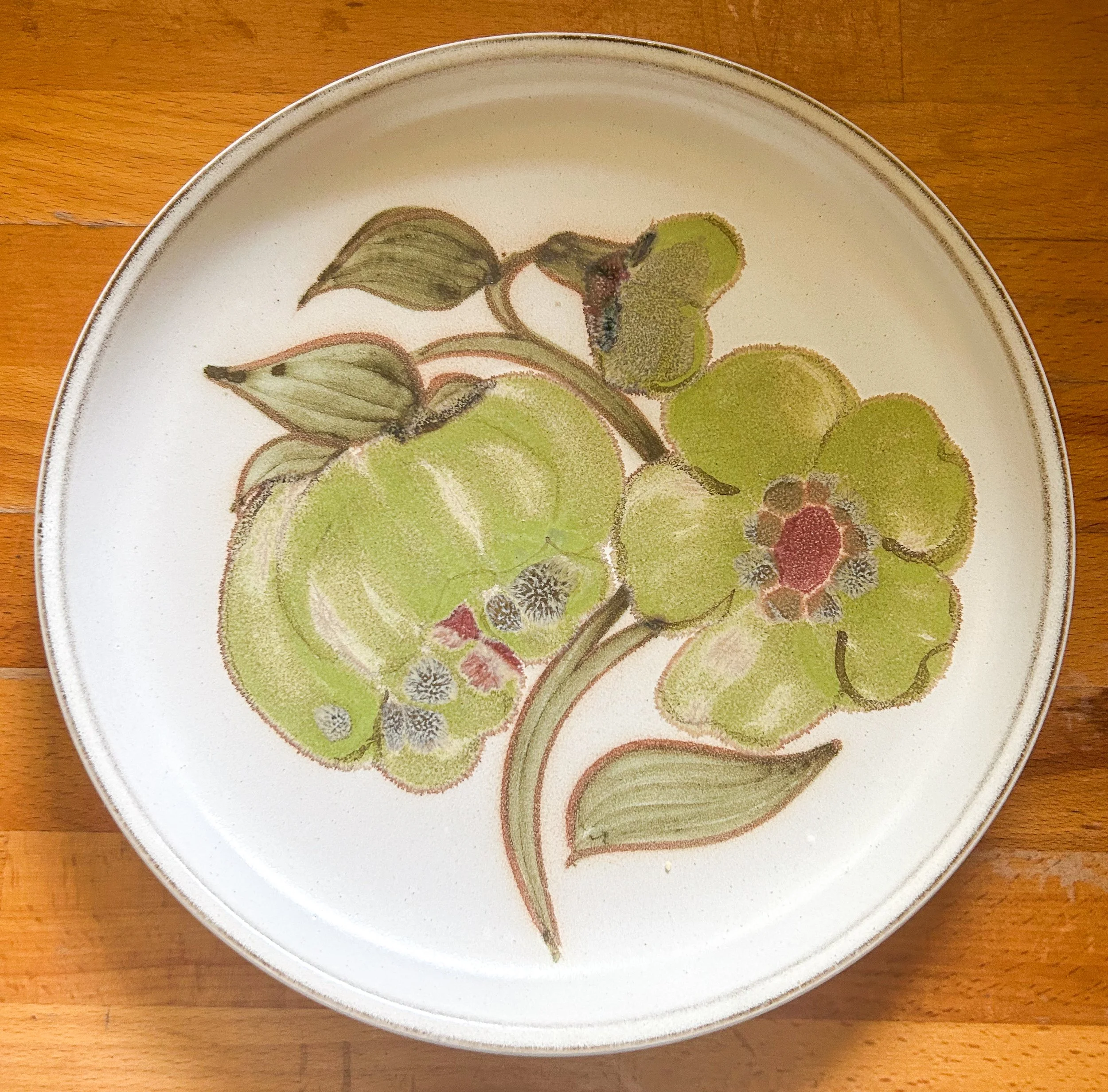
Denby plate from the Troubadour range
My mother-in-law’s plates will outlive that too.