Product First or Audience First?
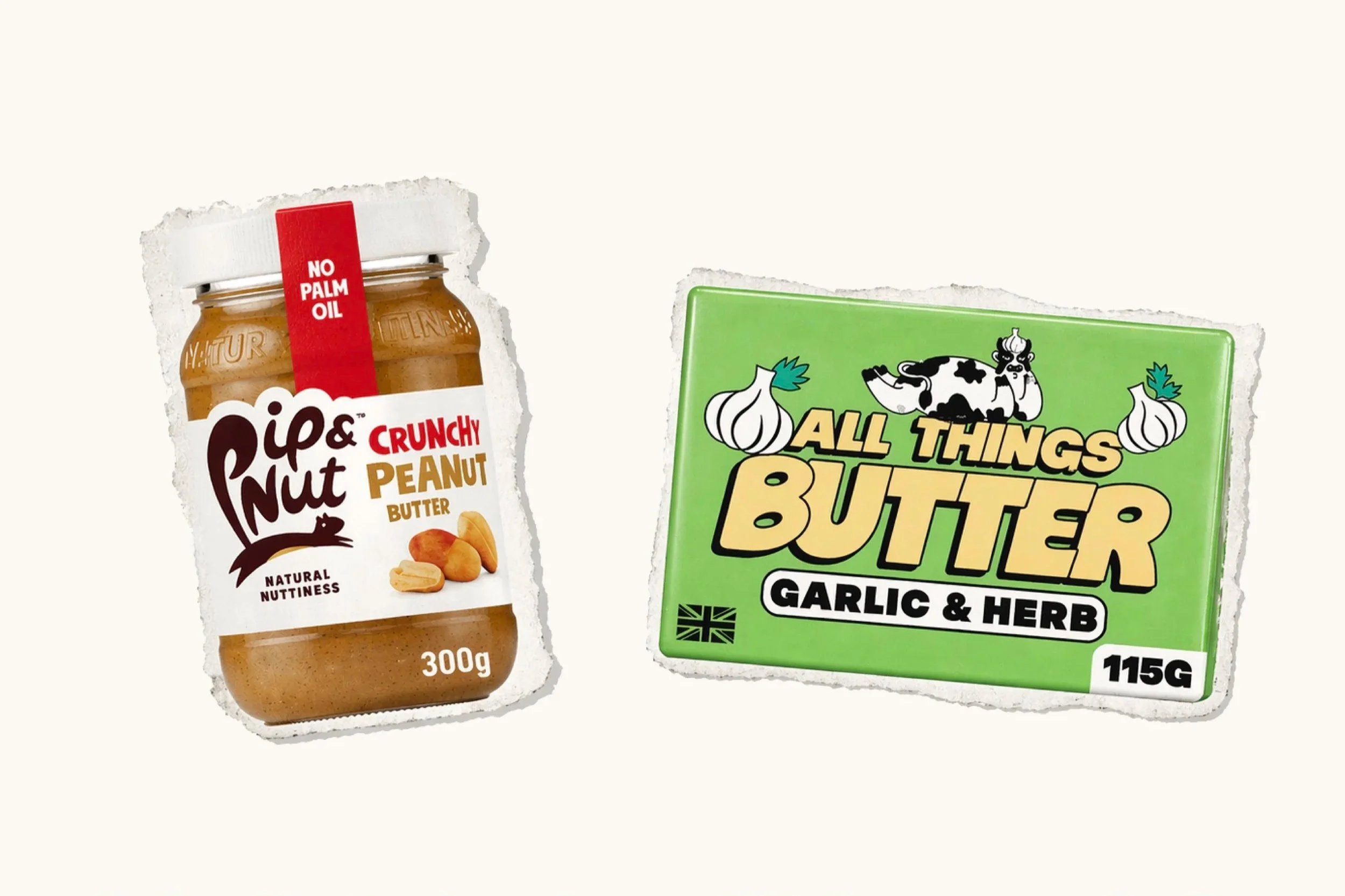
In 2013, Pip Murray made peanut butter in a rented kitchen, packed jars by hand, and took them to a market in Bermondsey on the weekends.
In 2022, chef Thomas Straker posted TikTok videos of himself making flavoured butter. He wasn't trying to build a butter business. The audience told him there was space for one.
Both spotted the same kind of gap: a stagnant food category dominated by heritage brands, ripe for something more modern. Both built businesses that filled it. Both worked.
But the sequence they followed couldn’t have been more different. And if you’re starting a product business right now, the question isn’t which one was smarter. It’s which one fits what you actually have.
Route 1: Product first, audience second
Pip Murray started Pip & Nut in 2013. She was training for marathons, eating a lot of peanut butter, and couldn’t find a brand without palm oil or added sugar. She started making her own in a rented kitchen — small batches, playing with flavours, 100 jars at a time.
Then she took them to Maltby Street Market, alongside her full-time job, on the weekends.
The stall ran for about three months. Long enough to learn what she needed to learn: strangers bought the jars, came back, bought more. The recipes got refined through real customer response. And she could feel — in a way no spreadsheet would ever tell her — that there was a business in this, not just a pet project.
After three months she stopped. The stall had done its job. Now she could commit properly: find a factory, raise the money, quit the Science Museum, push production. Within two years she was stocked in Selfridges and Sainsbury’s.
That’s what Route 1 looks like. You make something you believe in. You put it in front of real strangers as cheaply and quickly as you can. You use what you learn to decide whether to commit at scale.
What this route requires:
A product close enough to finished that strangers will pay for it. Not perfected — Pip was still tweaking recipes at the stall — but good enough to stand behind.
Upfront cash and upfront time. Stock, packaging, stall fees, and the weekends to actually show up. Pip did this alongside a full-time job. It’s hard work, and it’s not optional.
The willingness to hear no in person. Watch strangers walk past. Quote the price to someone’s face. It’s uncomfortable, but it gives you incredibly useful data.
What it gives you in return:
Fast, honest answers. Does it sell? At what price? Who’s actually buying? Does anyone come back?
You know within a weekend what an online shop wouldn’t tell you in a year.
Route 2: Audience first, product second
All Things Butter started the other way round.
Chef Thomas Straker had been posting cooking videos for a while. In 2022, he began a series focused entirely on flavoured butters — short clips of him making chimichurri butter, bone marrow butter, miso butter. The series went viral. Over a billion views. A following that grew by a million in a single month.
The audience told them what the market wanted. They saw a category — butter — that had been dominated by heritage brands with near-identical packaging for decades, and a clear appetite from viewers for something more modern and chef-led.
Two years after the series took off, Thomas and his co-founder Toby Hopkinson launched the brand All Things Butter. They sold 100,000 blocks in the first ten weeks.
They never needed a market stall. The audience response had already told them there was demand. The product launched into a market that was warmed up, watching, and waiting.
What this route requires:
An audience-building skill. Content that’s genuinely good. Consistency over 12–24 months minimum. Thomas Straker is a professional chef — he wasn’t guessing at what to post. He had real expertise, and his content reflected that.
Time. A long runway with no revenue. For months or years, you’re building the conditions for a business, not running one. Most founders can’t afford this.
A point of view people want to follow. Not just a product. A perspective, an aesthetic, an authority that makes people trust your taste. The audience has to be built around you and what you know, not the thing you’ll eventually sell.
What it gives you in return:
Demand that exists before the product does. By the time you launch, you’re not looking for customers — they’re already watching. Retail buyers take your call because you have a following. Launch costs less, because you don’t have to buy your way to visibility.
And you’ve already learnt, through two years of audience response, what they actually want you to make.
So which route is right?
If Pip Murray were starting Pip & Nut today, would she still go to Maltby Street?
Probably. Because nothing about her route depended on a pre-existing audience. She had a product she believed in, the skill to make it, and enough cash for small batches and a stall fee. The market still answers the question she needed to answer: will strangers pay for this?
Today, she would probably also film the stall, document the queue, the first supermarket meeting, and the first rejected pitch. The market stall validates demand. The content captures the story that helps scale it afterwards. Today’s version of Route 1 has Route 2 stapled onto the back of it — not instead of the stall, alongside it.
But she wouldn’t have built an audience first and let the product emerge from it. That isn’t the business she had. The product was the starting point, and working out whether strangers wanted it was the next step.
Thomas Straker couldn’t have taken her route either. A market stall wouldn’t have told him anything he needed to know. He wasn’t starting with a product — he was starting with a skill and a point of view. The audience-building was the only way to find out which product to make.
Two very different starting points. Two very different routes. Neither would have worked in the other’s business.
How to decide which route fits you
Before you pick, answer these honestly.
Do you have a product, or do you have a point of view?
If you have something made — a recipe, a prototype, a finished sample — Route 1 tests it fastest. If what you have is expertise, taste, or a perspective people might follow, Route 2 lets that do the work.
Do you have cash or do you have time?
Route 1 spends money quickly but gets you answers in days. Route 2 spends almost nothing for 12–24 months but requires you to work for free during that time. Most founders have to pick. Very few have both.
Can your product be judged from a screen, or does it need to be experienced in person?
Scent, taste, texture, weight — these don’t transfer well to video. Visual products and content-friendly categories do. The more sensory the product, the stronger the case for getting it into people’s hands directly.
Is audience-building actually a skill you have?
Not “am I willing to try.” Can you produce content people want to watch, for two years, consistently, while earning nothing from it? Most founders can’t. That’s not a failure — it’s just a different skill set, and it matters which one you’ve actually got.
The question to ask before you start
Every product business needs to answer the same question eventually: do strangers want this enough to pay for it?
The routes are just different ways of getting there.
Pip Murray answered it with a market stall. Thomas Straker answered it with an audience. Neither of them launched blind. Neither of them assumed the answer. Both of them found a way to test demand before committing to production at scale.
So before you place a production order, before you commit to a website, before you decide this is the year you’re going to make it work — ask yourself:
Which route am I actually running?