Nobody Needs Your Candle
Nobody needs a £28 candle.
You can buy one for £2 at the supermarket. Same function. Room smells nice. Done.
And yet Jo Malone sells a candle for £50. Diptyque charges £58. Boy Smells charges £30.
These aren’t broken businesses. They’re desire-based businesses. And they run on completely different economics to the ones most business advice is written for.
I wrote recently about Why ‘What Problem Does This Solve?’ Stops Creative Businesses cold. This is the other side of that question: if you’re not solving a problem, what are you actually building — and how do you know it’s viable before you invest?
The distinction that changes how you validate
Most business advice — books, courses, accelerators, startup frameworks — defaults to need-based thinking. Desire-based businesses exist in those courses too, but they tend to sit inside marketing modules rather than being treated as a fundamentally different model that validates differently from the start.
Need-based: someone has a problem. They search for a solution. Your job is to be found and be good at it. The demand exists before you do.
A leaking tap needs a plumber. A tax deadline needs an accountant. A scheduling nightmare needs a booking system. The demand exists before the business does.
Desire-based businesses work differently.
Nobody is searching for your specific candle. Or your illustrated tea towel. Or your handmade jewellery. Or your homeware brand. The functional alternative already exists — cheaper, faster, available on every high street.
Your job isn’t to be found by people who already want what you make.
Your job is to make them want it in the first place.
That’s a fundamentally different commercial challenge. And most founders of desire-based businesses don’t recognise it as a separate discipline until they’ve already invested months of work and thousands of pounds into product development.
Trust me, I know.
Why this distinction matters
In a need-based business, the validation question is straightforward: does this problem exist, and will people pay to make it go away?
In a desire-based business, that question doesn’t work. Nobody has an unsolved candle problem. Nobody is lying awake thinking “if only someone would make a £28 soy wax candle in a ceramic jar” The desire doesn’t exist yet. You have to create it.
Which means the entire validation process is different.
Need-based validation: find people with the problem → test whether your solution works → check if they’ll pay.
Desire-based validation: find people who respond emotionally to what you make → test whether that emotional response converts to actual purchases → check if you can reach enough of them to build a business.
The first sequence starts with a problem. The second starts with an audience.
And if you run the first sequence on a desire-based business, you’ll get stuck on step one — forever trying to articulate a problem that doesn’t exist, while your actual product sits there being perfectly good and completely unsold.
What desire-based businesses actually need to validate
Here’s where it gets practical. If you’re building a desire-based business — candles, homeware, fashion, jewellery, art, food products, anything where the purchase is driven by wanting rather than needing — these are the questions that actually matter:
1. Does this create a strong enough reaction from strangers?
Not your friends. Not your mum. Strangers who have no social obligation to be nice to you.
Post your work where strangers can see it. Show it at markets. Put it in front of people who don’t know your name. What you’re looking for isn’t polite approval — “that’s lovely” means nothing. You’re looking for a specific type of response: “where can I buy this?” or “how much is this?” or someone physically picking it up and not putting it down.
If 10-15% of strangers who see your product have a strong emotional response, you’re onto something. If it’s polite compliments or silence, the product might be good — but the desire isn’t strong enough yet.
2. Will they pay your price — not a theoretical price, your actual price?
A £28 candle competes with a £2 candle for functional purpose. The £26 difference is pure desire premium. Will people actually pay it?
Test this before you order stock. List items at your target retail price. See if anyone actually opens their wallet. Pre-orders count. Compliments don’t.
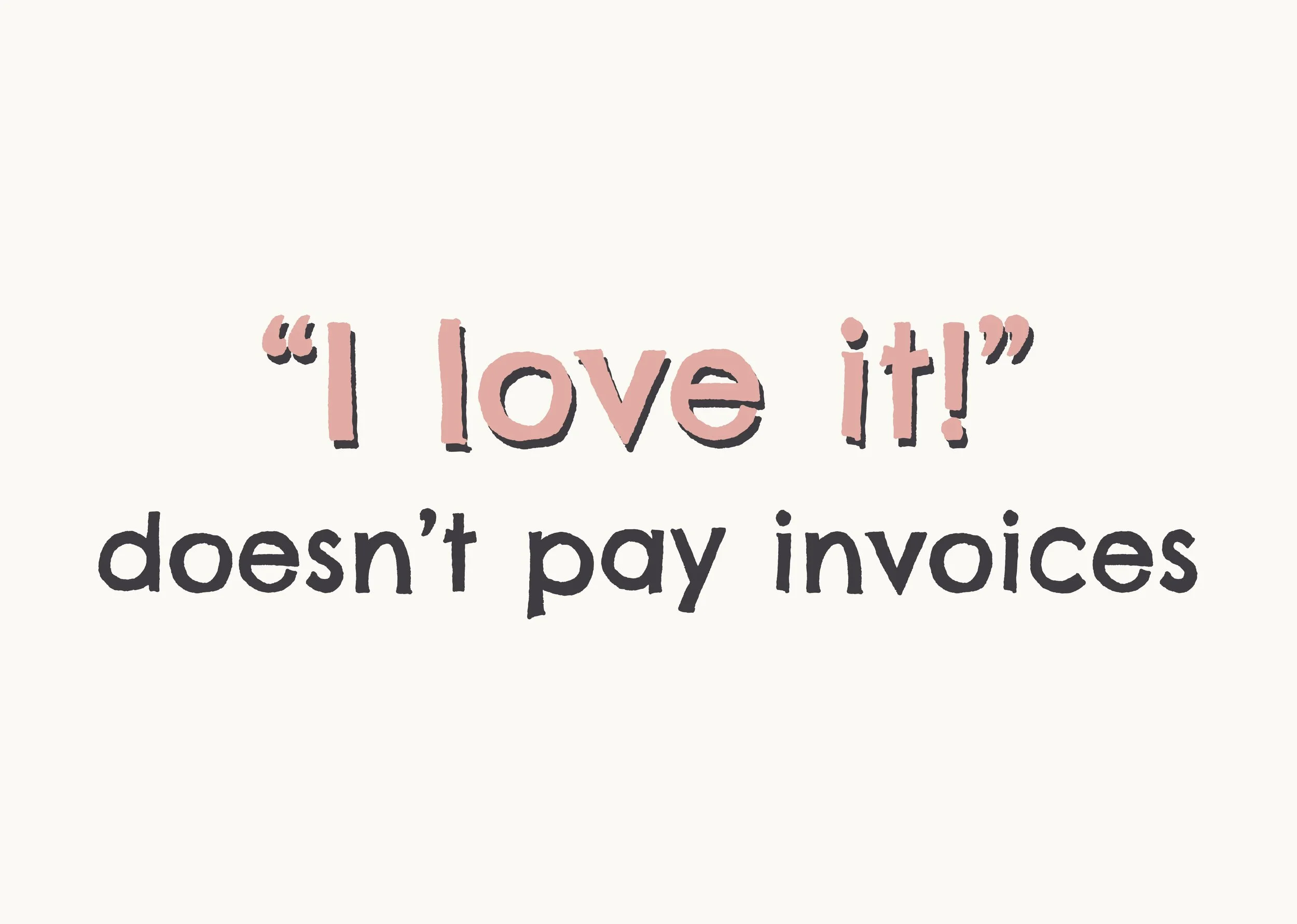
The gap between “I love this” and “I’ll pay £28 for it” is where most desire-based businesses die. People will tell you your product is beautiful all day long. That doesn’t mean they’ll buy it. What you need is evidence of purchase intent, not enthusiasm.
3. Can you reach enough of the right people?
This is where the maths matters and where most desire-based businesses fail — not because the product is wrong, but because the distribution is.
Work backwards. If you need £10,000 in annual revenue from handmade jewellery at £45 per piece, you need roughly 220 sales. If your conversion rate is 2-5%, you need 4,400-11,000 people seeing your work per year. Can you realistically reach that many of the right people? What does that cost in time or money?
If reaching your required audience costs more than you’ll make from them, you don’t have a product problem. You have a distribution problem. And no amount of improving the product will fix it.
4. Can you articulate why yours and not someone else’s?
Search Google for “soy candle.” Scroll through 500 products and shops. Now explain what makes them different — and more importantly, explain it in a way that matters to you as a buyer.
I live within walking distance of a Jo Malone and an M&S — both sell candles. I could buy from Diptyque online in two clicks. These are already premium, already desirable brands.
But I buy candles from a small company called The Botanical Candle Co. Natural ingredients, beautifully made, and a brand that feels genuinely human — a small business that cares deeply about what they make. When I gift one, the person probably won’t recognise the name. That’s part of why I love it — it feels like sharing a discovery, not picking something off a shelf.
And I notice these are all emotional responses. Not one of them is about the candle’s function. The room would smell fine with a £2 alternative. But I don’t want the £2 or the £50 alternative. I want the Green Fig candle from the small business that makes me feel good about the purchase.
That’s what differentiation looks like in a desire-based business. It’s not a feature list. It’s a feeling.
Replace candles with ceramics, jewellery, illustrated homeware, artisan food — the mechanism is identical. The product changes. The emotional purchase doesn't.
The infrastructure most people skip
Here’s something I think about a lot, having spent 15 years working inside desire-based businesses before trying to build one myself.
At a brand like Mulberry, the infrastructure that creates desire already exists. The 50 years of brand story. The audience. The distribution channels. The positioning. The emotional association. When a new product reaches the production team, the demand-creation work has already been done — or is being done simultaneously by an entire marketing department.
When you’re a founder building from scratch, all of that infrastructure is your responsibility. And it’s invisible work. It doesn’t feel like progress the way designing a product does. It doesn’t look like a finished thing you can photograph or hold.
The demand-creation work gets deferred, not because founders don’t know it matters, but because it doesn’t feel like building. They go straight to the part they know and love — the product. The design. The sourcing. The production. Because that’s tangible. That feels like building a business.
But in a desire-based business, the product is actually the last piece. Not because it doesn’t matter — it matters enormously. But because without the audience and the desire and the distribution, even a brilliant product sits in your spare bedroom unsold.
The sequence for desire-based businesses:
Build an audience of people who respond to your aesthetic, your values, your point of view
Create and sustain desire through consistent visibility and emotional connection
Validate that desire converts to actual purchases (pre-orders, waitlists, market sales)
Then — and only then — invest in production at scale
What this means practically
This isn’t a post about talking yourself out of making things. Desire-based businesses are real, viable, and some of the most successful brands in the world. Nobody needs a £2,000 Mulberry handbag. Millions of people want one.
But desire-based businesses fail when founders treat them like need-based businesses — trying to validate a problem that doesn’t exist, or skipping validation entirely because “people will love it when they see it.”
People might love it. But love doesn’t pay invoices.
What pays invoices is an audience that already wants what you make, a price they’ll actually pay, a way to reach enough of them, and a reason to choose you over every alternative.
Validate those four things — with evidence, not hope — and you have a business worth building.